
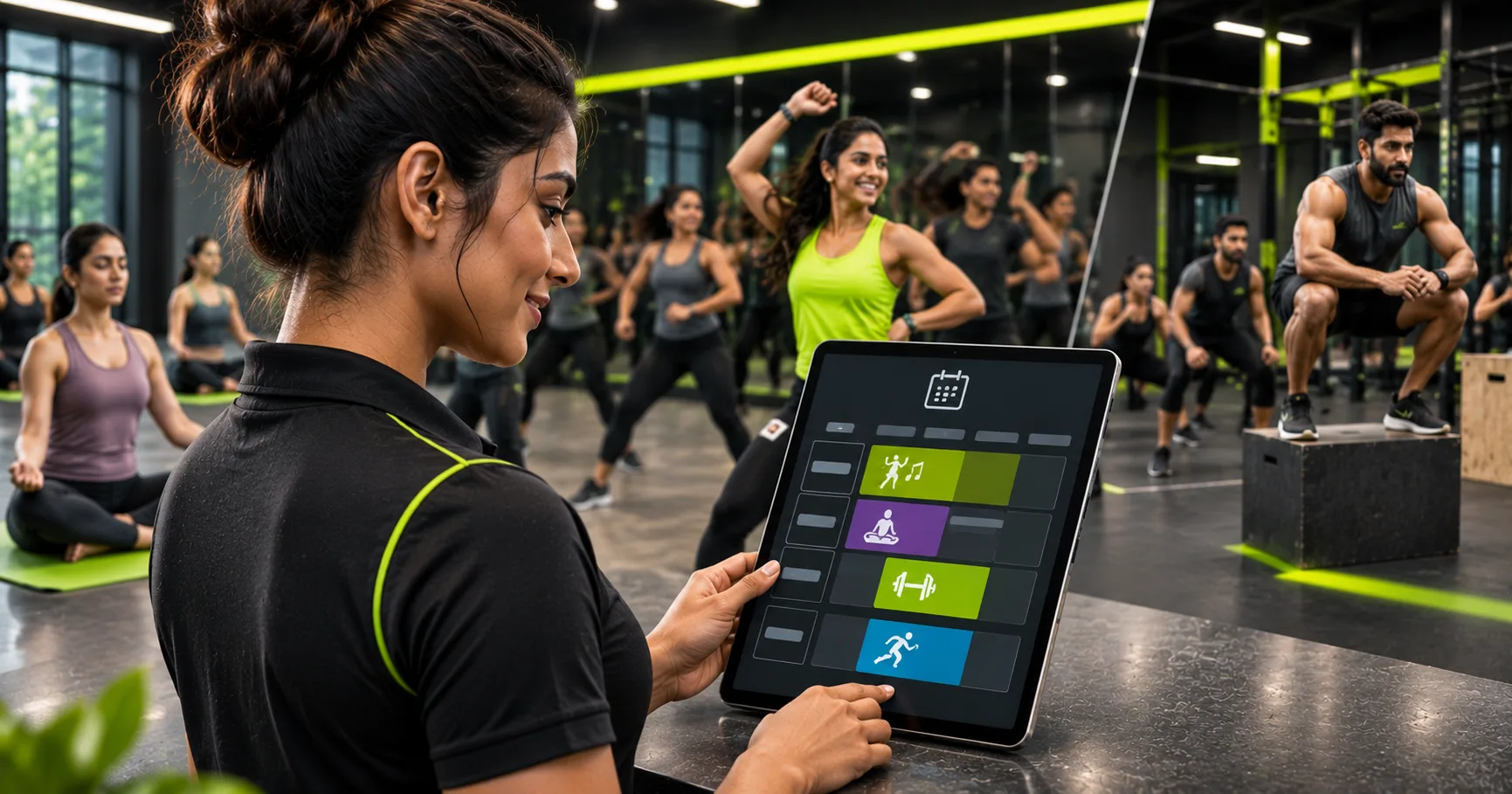
In modern commercial fitness centers and boutique studios across India, group fitness classes—ranging from high-energy Zumba and Bollywood Dance Cardio to HIIT, Spin, and functional bootcamps—are the primary community magnets. Group classes humanize the gym experience. While solitary weightlifting can feel lonely and isolating for beginners, dancing in a synchronized, music-pumping studio surrounded by thirty enthusiastic peers floods the brain with endorphins and creates unbreakable social accountability.
Yet, managing a group fitness studio is notoriously one of the most volatile operational challenges in the fitness industry. Without digital class reservation controls, studios oscillate violently between two financial extremes: chaotic overbooking during evening peak slots (where 45 members cram into a 25-person studio, creating physical safety hazards and furious complaints), and desolate ghost classes during mid-morning and afternoon slots (where the gym pays an expensive freelance instructor ₹1,500 to teach two bored members). Mastering Dynamic Studio Capacity Allocation, Automated Waitlists, and Digital Class Booking turns your studio into a predictable, high-margin retention engine.
The Physics of Studio Yield Management: Revenue per Square Foot
To optimize your studio operations, treat your group fitness room like an airline cabin: every empty studio spot during a live class is an unrecoverable perishable asset.
Consider a 1,200 sq ft dedicated group fitness studio. If you pay an elite celebrity Zumba instructor ₹1,800 per 60-minute session, that class costs the gym ₹30 per minute in direct coaching payroll, plus central air conditioning and dynamic lighting. If only 4 members show up, your direct instructional cost per attendee is an unprofitable ₹450. Conversely, if 28 members pack the studio, your cost per attendee drops to barely ₹64, while delivering intense community energy that cements long-term membership renewals.
Furthermore, without automated booking rules, 'Spot Hoarding' destroys member satisfaction. Aggressive members verbally reserve spots with towels or mats, while casual attendees book multiple classes through reception and fail to show up, blocking genuine members who were turned away at the door.
Manual Studio Sign-Ups vs. Gympify Automated Class Management
Here is an operational comparison between the chaotic clipboard sign-up system and Gympify's mobile booking engine:
| Operational Metric | Legacy Clipboard / WhatsApp Group Booking | Gympify Integrated Mobile Class Engine |
|---|---|---|
| Spot Reservation | Chaotic paper sheets at reception; arguments over who arrived first. | 1-Tap in-app booking; visual spot selection on studio floor layout map. |
| Overbooking & Safety | Uncapped entry; studios dangerously overcrowded, violating fire codes. | Hard capacity caps (e.g., 25 spots); bookings lock automatically when full. |
| No-Show Management | 35% no-show rate; members book casually and fail to attend. | Automated 2-hour cancellation window; '2 No-Shows = 7-Day Booking Ban' rule. |
| Waitlist Automation | Receptionists manually call people on paper waiting lists; slow and clunky. | Instant algorithmic waitlist promotion: next member notified via WhatsApp in 30s. |
| Instructor Compensation | Trainers paid flat fees regardless of whether 2 or 30 members attend. | Performance-tiered pay: Base pay + per-head bonus incentivizes high attendance. |
The Step-by-Step Blueprint to Optimizing Group Studio Capacity
Maximizing studio yield requires establishing transparent booking rules and dynamic scheduling aligned with urban member commuting habits.
Step 1: Establish Strict Studio Capacity Caps & Floor Spacing
Calculate your safe operational capacity based on exercise modality: - Dynamic Aerobic Classes (Zumba, Bollywood, HIIT): Require 35 to 45 square feet per participant to allow unrestricted arm swings, lateral lunges, and jumping jacks without physical collisions. - Stationary Equipment Classes (Indoor Spin, Reformer Pilates): Require 25 to 30 square feet per station. Enter these strict physical limits into Gympify. Once 25 spots are reserved for 7:00 PM Zumba, the app immediately switches the class status to 'Waitlist Only.'
Step 2: Deploy the 'Smart Waitlist' with Instant Auto-Promotion
When a popular class reaches full capacity, members can join the digital waitlist with one tap. If an enrolled member cancels their reservation at 4:30 PM (prior to the 2-hour late-cancellation cutoff), Gympify's background engine instantly alerts the first person on the waitlist via WhatsApp: 'Hi Ananya, a spot just opened for 7:00 PM Zumba! You have 15 minutes to claim your spot: [Confirm Link].' If unconfirmed, the slot passes automatically to the next person, ensuring 100% full studio occupancy every evening.
Step 3: Enforce the 'No-Show' Accountability Protocol
Eliminate casual ghost bookings by embedding automated accountability rules: - Cancellation Cutoff: Members must cancel at least 2 hours prior to class start so waitlisted members have adequate notice to travel. - Late Cancel / No-Show Strike System: If a member books a class and fails to attend twice in a 30-day window, the system automatically restricts their advance booking window to 12 hours (rather than 7 days) for the subsequent two weeks. This simple algorithmic rule slashes no-shows from 35% down to under 4%.
Step 4: Align the Timetable with Real Demographic Flow
Stop running random classes at arbitrary hours. Program your weekly studio timetable around demographic rhythms: - 6:30 AM - 7:30 AM (Corporate Power Hour): High-intensity HIIT, Functional Tabata, and Power Yoga for executives before work. - 10:30 AM - 11:30 AM (Homemaker & Senior Vitality): Gentle Pilates, Dance Cardio, and Joint Mobility for mothers and retirees. - 6:30 PM - 7:30 PM (The Evening Endorphin Rush): Celebrity Zumba, Bollywood Dance, and Strength Circuits to de-stress after work. - Weekend Masterclasses (Saturday 9:00 AM): 90-minute guest instructor workshops, sound healing, or outdoor bootcamps.
Step 5: Tie Instructor Pay to Attendee Headcount
Move away from flat-rate instructor payroll. Implement a Base + Per-Head Incentive Split: - Base Rate: ₹800 (guaranteed baseline). - Incentive Bonus: ₹50 per attendee for every member above 10 participants. If an instructor fills the studio with 28 members, they earn ₹1,700 for the hour. This motivates instructors to become active marketing champions—promoting their weekly classes on Instagram, playing trending music, and learning members' names to maximize attendance.
Commercial Payoff: Group Fitness as the Core Retention Engine
Fitness business industry cohorts prove that members who participate in at least two group fitness classes per week have an annual membership retention rate of 74%, compared to barely 38% for solitary free-weight exercisers. When you optimize your studio timetable and eliminate booking friction, your group fitness studio becomes your gym's most powerful social anchor and renewal driver.
Key Operational Takeaway
Empty studios and chaotic overbooking are solved through digital capacity controls. Implementing 1-tap mobile reservations, automated waitlist promotions, and no-show strike penalties guarantees packed, safe, high-energy classes that cement member loyalty. To explore Gympify's group class scheduling, waitlist automation, and instructor payroll tools, review Gympify's scheduling modules or request an operational walkthrough today.
Related Operational Guides
Maximize your fitness studio's operational yield and programming with these interconnected resources:
- CrossFit & Functional Box Management: Digitize WODs, whiteboards, and competitive leaderboards.
- Why Indian Gym Members Crave a Custom Branded Mobile App: Enable 1-tap class bookings directly on members' smartphones.
- The First 45 Days: The Ultimate Retention Playbook: Integrate newcomers into high-energy group fitness classes.
Frequently Asked Questions
How far in advance should members be allowed to book group fitness classes?
A rolling 7-day advance booking window is ideal. Allowing members to book weeks in advance leads to high forgetting and no-show rates, while opening bookings only 24 hours prior creates frustration for working professionals planning their schedules.
How does Gympify prevent members from booking two classes at the same time?
Gympify's scheduling logic prevents time-collision bookings: if a member reserves a 7:00 PM Zumba class, the system automatically blocks them from booking a concurrent 7:00 PM Spin or HIIT session on that same day.
Can gyms charge extra fees for specialized boutique classes?
Yes. Many gyms offer standard Zumba/HIIT free with core memberships, while offering premium boutique modalities (such as Reformer Pilates, Aerial Yoga, or Sound Bathing) as paid add-ons purchased via in-app class credit packs.
What is an appropriate late-cancellation window for group fitness classes?
A 2-hour cutoff prior to class start is the industry standard. This gives waitlisted members sufficient notice to pack their gym clothes and travel to the facility without disrupting their evening plans.