
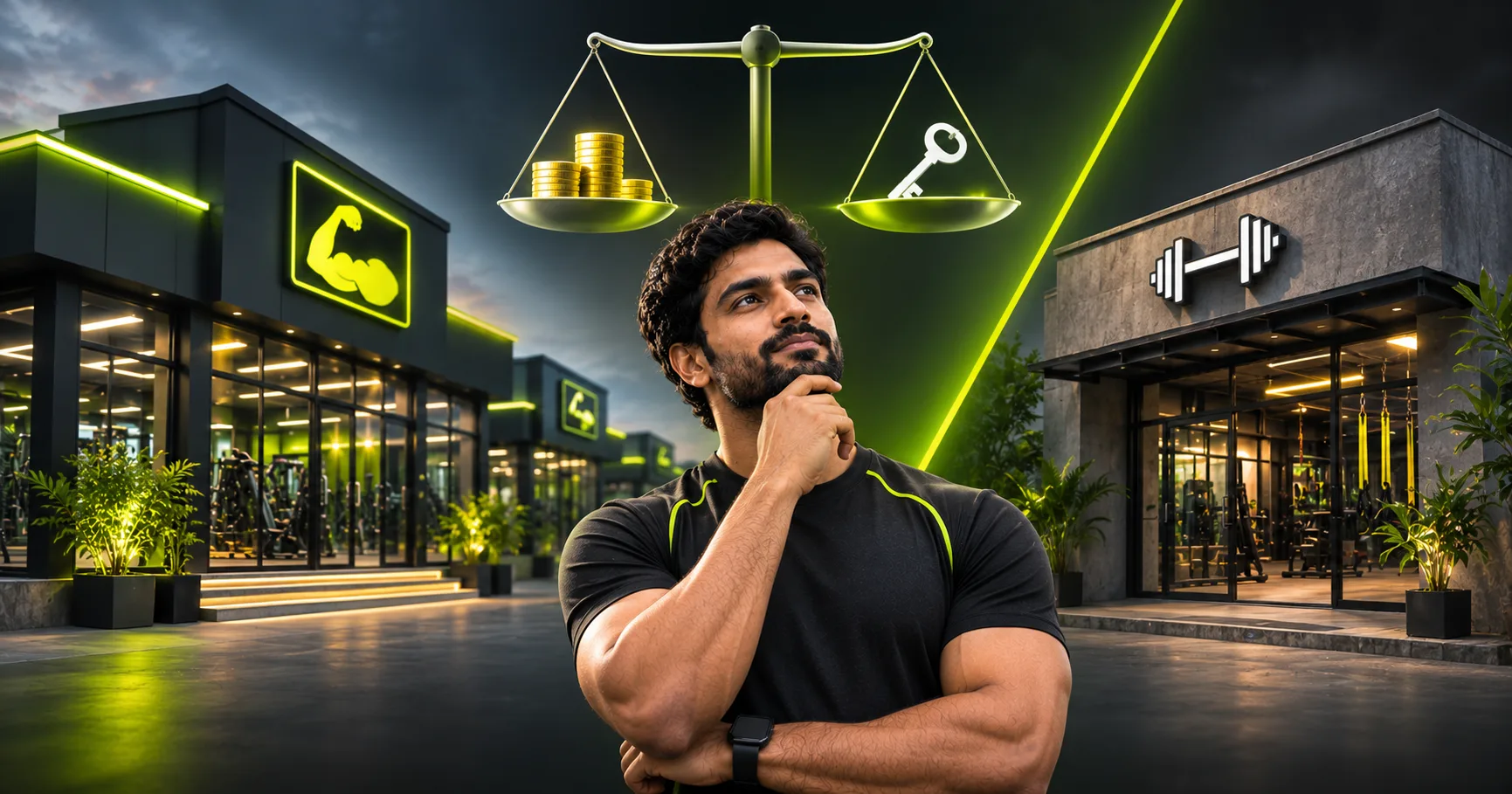
For aspiring fitness entrepreneurs and investors looking to enter India's booming ₹15,000-crore wellness industry, the journey begins with a monumental crossroads decision: Should you buy into an established commercial gym franchise (such as Anytime Fitness, Gold's Gym, or Cult.fit), or should you launch your own independent, proprietary fitness brand from scratch?
Franchise sales brokers present a seductive pitch: instant global brand recognition, standardized operational manuals, negotiated equipment discounts, and turn-key business support that guarantees rapid profitability. However, seasoned fitness industry consultants know that behind the glossy marketing brochures lie aggressive financial commitments: multi-lakh upfront franchise fees, mandatory monthly royalty deductions, restrictive equipment procurement mandates, and strict territorial constraints. Conversely, building an independent gym offers total operational sovereignty and 100% profit retention, but demands that the founder solve branding, marketing, software, and operational architecture from scratch. Choosing the wrong path can trap your capital in a multi-crore financial sinkhole.
The True Financial Anatomy: Dissecting the Capital Expenditure (CapEx)
To evaluate franchise vs. independent gym models objectively, examine the detailed capital allocation required to launch a standard 4,000 sq ft commercial fitness center in an urban Indian market:
1. The Franchise Model (Total CapEx: ₹1.8 to ₹3.2 Crores): - Initial Franchise Fee: ₹15 to ₹30 Lakhs upfront non-refundable fee paid directly to the franchisor. - Mandatory Branded Equipment: Franchisors mandate specific commercial equipment brands (often Life Fitness, Precor, or Matrix) purchased through designated vendor channels at marked-up prices (₹80 Lakhs - ₹1.4 Crores). - Standardized Architectural Interior Fit-Out: Strict brand guidelines require approved corporate contractors, imported vinyl flooring, and centralized signage (₹50 - ₹90 Lakhs). - Ongoing Monthly Royalties: 6% to 9% of Gross Monthly Revenue PLUS 1.5% to 2% mandatory National Marketing Fund contributions, deducted every single month regardless of whether your gym makes a profit or a loss.
2. The Independent Brand Model (Total CapEx: ₹75 Lakhs to ₹1.4 Crores): - Franchise Fee: Zero. 100% of your equity and capital remain in your business. - Equipment Procurement Freedom: Freedom to negotiate directly with premier domestic manufacturers (such as Bullrock Fitness, Jerai Fitness, or direct OEM importers), saving 40% to 50% on capital costs (₹40 - ₹65 Lakhs). - Customized Interior Architecture: Tailor your interior ambiance, lighting, and soundproofing to your exact neighborhood demographic (₹25 - ₹45 Lakhs). - Ongoing Royalties: Zero. Every single rupee of operating profit flows directly to your bottom line.
Franchise Network vs. Independent Brand: Operational Comparison
Here is an empirical comparison across core business dimensions in the Indian fitness landscape:
| Strategic Dimension | Commercial Gym Franchise Model | Independent Gym Powered by Gympify |
|---|---|---|
| Initial Setup CapEx | ₹1.8 to ₹3.2 Crores (high franchise fees and mandatory vendors). | ₹75 Lakhs to ₹1.4 Crores (optimized direct vendor procurement). |
| Ongoing Revenue Deductions | 7% to 11% Gross Revenue paid monthly in royalties and marketing fees. | 0% Royalty; modest fixed cloud software subscription. |
| Pricing & Membership Freedom | Rigid; corporate office dictates national pricing, restricting local agility. | 100% Agile; adjust pricing, student passes, and festive offers to local demand. |
| Initial Brand Awareness | High immediate consumer trust on day one due to national advertising. | Starts at zero; built rapidly via hyperlocal Meta ads and Google Maps local SEO. |
| Break-Even & Payback Timeline | 28 to 42 months due to massive initial CapEx and monthly royalty drag. | 14 to 22 months; rapid return on invested capital (ROIC). |
The 4 Hidden Traps of Buying a Gym Franchise in India
Prospective franchisees must conduct deep due diligence on four structural risks rarely disclosed in franchise sales meetings:
1. Royalty Deductions on Gross Revenue, Not Net Profit
This is the most dangerous clause in franchise contracts. Franchise royalties (typically 7%) are calculated on Gross Topline Turnover. If your gym generates ₹10 Lakhs in monthly membership sales, the franchisor automatically deducts ₹70,000. If your commercial rent is ₹4 Lakhs, electricity is ₹1 Lakh, staff payroll is ₹2.5 Lakhs, and maintenance is ₹1 Lakh, your net operating profit might be zero—yet you are still legally obligated to wire ₹70,000 to corporate headquarters.
2. The Equipment Kickback Monopoly
Franchise networks prohibit you from sourcing your own equipment. They mandate that all treadmills, dumbbells, and turf be procured through designated corporate distributors. Corporate headquarters often receives significant undisclosed vendor kickbacks on these bulk equipment purchases, inflating your startup CapEx by ₹20 to ₹40 Lakhs.
3. Territorial Cannibalization
While franchise contracts include 'Exclusive Territory' clauses, definitions are often narrow (e.g., a 1.5 km radius). As the franchise brand expands, corporate sales teams will aggressively sell another franchise unit 2 kilometers down the road in the neighboring sector, actively splitting your potential member pool and diluting your territory.
4. Clunky Mandatory Legacy Software
Franchisees are forced to utilize the franchisor's proprietary, outdated software system—which frequently lacks modern Indian digital necessities like native UPI AutoPay e-mandates, WhatsApp Business API automation, and responsive mobile apps. You pay monthly software fees for tools that hinder your operational agility.
The Independent Path: Building an Enterprise Brand with Modern Tech
Historically, entrepreneurs bought franchises because they lacked the technical tools to run a professional fitness business independently. Today, the technological playing field has been completely leveled. By leveraging Gympify's enterprise SaaS infrastructure, an independent gym owner acquires world-class operational capabilities: - Native custom-branded iOS and Android mobile apps with dynamic QR access. - Automated UPI AutoPay recurring monthly billing. - Hyperlocal Meta ads and WhatsApp lead management CRM pipelines. - 3D facial recognition turnstile integration. An independent operator armed with Gympify operates with the technical polish of an international franchise, while saving ₹30 Lakhs in upfront fees and keeping 100% of their operational profits.
Key Operational Takeaway
Buying a gym franchise offers instant brand recognition, but extracts a brutal financial toll: double the startup CapEx, 8%+ ongoing gross revenue royalties, and zero operational freedom. Modern independent fitness operators leveraging Gympify build premium, agile, tech-enabled local brands that reach break-even twice as fast while retaining 100% of their business profits. To discover how Gympify empowers independent fitness entrepreneurs, explore our software tiers or request a franchise vs. independent consultation today.
Related Operational Guides
Scale your fitness enterprise and make informed business decisions with these resources:
- Gym Exit Strategy & Business Valuation: Position your independent brand for high-multiple acquisition exits.
- Tier-2 & Tier-3 City Gym Expansion Playbook: Master low-CapEx high-ROI fitness expansion in emerging markets.
- Why Indian Gym Members Crave a Custom Branded Mobile App: Build franchise-grade digital prestige under your own name.
Frequently Asked Questions
How much does an Anytime Fitness or Gold's Gym franchise cost in India?
A full-format franchise setup for Anytime Fitness or Gold's Gym in urban India typically demands total capital expenditure between ₹2.2 Crores and ₹3.5 Crores, including a ₹20-30 Lakh franchise fee, mandatory imported equipment lines, and corporate fit-outs.
Can an independent gym compete successfully against a major franchise gym next door?
Yes. Independent gyms consistently defeat national franchises by offering superior localized community hospitality, flexible recurring monthly pricing without corporate lock-ins, and investing savings from royalties back into premium coaching and member perks.
What is the typical break-even timeline for an independent gym in India?
A well-capitalized independent commercial gym (CapEx: ₹85 Lakhs - ₹1.2 Crores) running automated recurring billing and hyperlocal digital marketing typically achieves operational break-even (covering monthly overheads) within 4 to 6 months, and full capital payback within 14 to 20 months.
Do independent gyms have lower business valuation multiples than franchise units?
Not necessarily. While franchise networks have recognized names, independent gyms with clean audited books, predictable recurring revenue (MRR), and proprietary custom-branded apps command higher EBITDA valuation multiples (4x to 6x) from private equity investors because they are not encumbered by franchise royalty liabilities.