
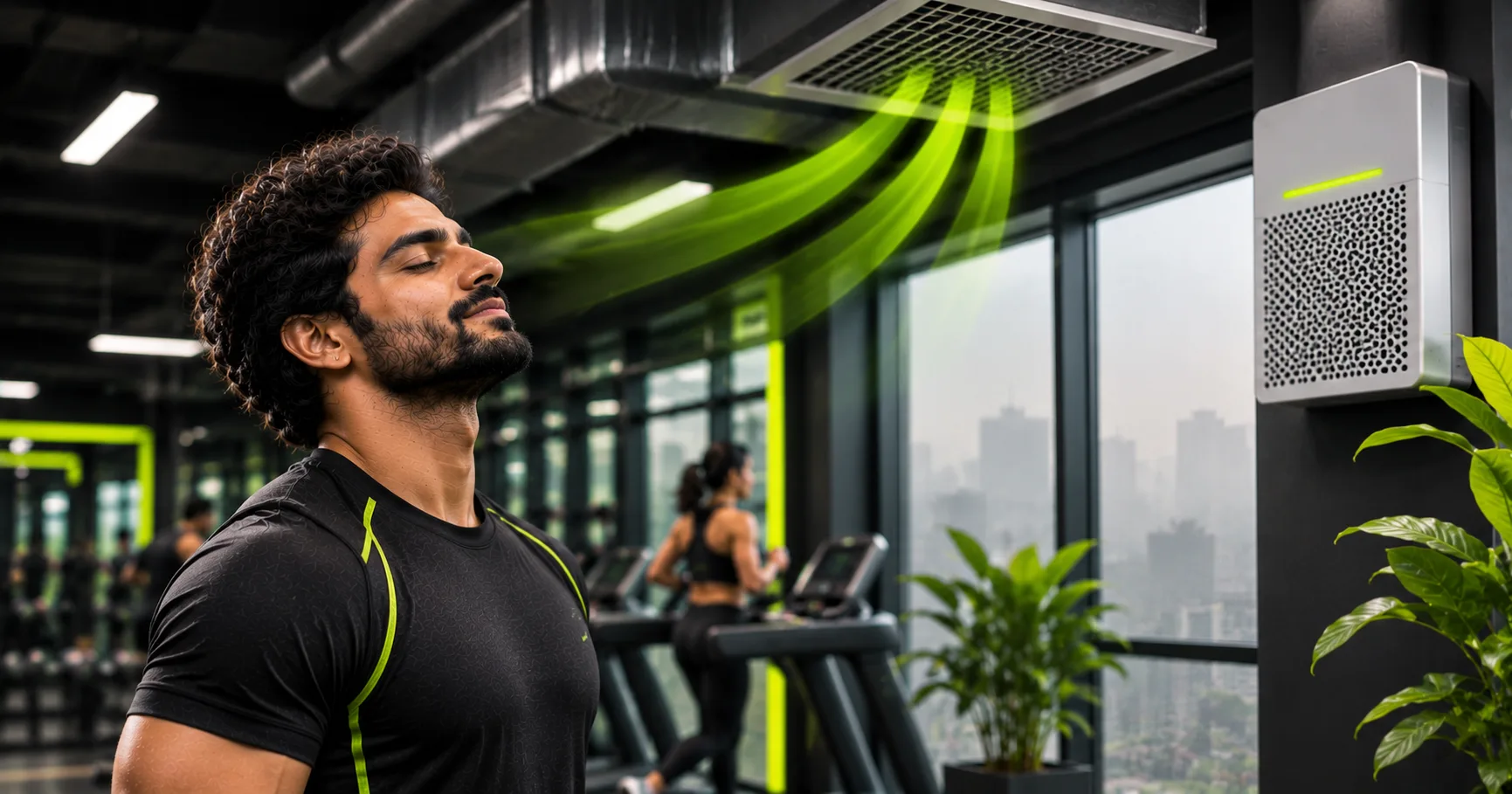
Walk into a crowded commercial fitness center at 7:30 AM in North India—whether in Delhi NCR, Ludhiana, or Lucknow during the winter months, or in a basement facility in Bengaluru or Mumbai during the monsoon—and the sensory assault is unmistakable: a suffocating, humid wall of air smelling of stale sweat, damp rubber flooring, and ammonia. The air feels heavy, breathing during high-intensity intervals feels like suffocating, and by the 40th minute of training, members experience brain fog, lethargy, and unexplained headaches.
Most gym owners assume members are simply out of shape. In reality, the facility is suffering from severe Indoor Environmental Deprivation: dangerous carbon dioxide (CO2) accumulation exceeding 2,500 parts per million (ppm), airborne bio-effluents, and toxic particulate matter (PM2.5 and PM10). During exercise, an athlete's respiration rate multiplies tenfold—breathing in up to 60 to 100 liters of air per minute. If that air is stale, oxygen-deprived, and polluted, athletic performance collapses, member churn skyrockets, and the gym becomes a biological incubator for respiratory illnesses.
The Hidden Chemical Hazard: The CO2 Fatigue Trap in Fitness Centers
To understand why members leave poorly ventilated gyms, look at the atmospheric chemistry of a sealed workout floor. Outdoor ambient air contains roughly 400 to 450 ppm of carbon dioxide. In an enclosed gym where 40 athletes are performing heavy squats and treadmill sprints under standard recirculating split air conditioning, CO2 levels rapidly surge past 2,000 to 3,000 ppm within sixty minutes.
Cognitive and athletic science proves that CO2 levels above 1,500 ppm trigger severe physiological impairments: - Acute Central Fatigue: The nervous system downregulates muscular force output, making weights feel significantly heavier. - Premature Lactic Acidosis: Inadequate oxygen saturation accelerates anaerobic glycolysis, causing muscles to burn and fail prematurely. - Cognitive Impairment & Headaches: Elevated cerebral arterial blood pressure causes dizziness, nausea, and post-workout headaches. Members leave the gym feeling drained rather than energized, attributing their malaise to 'poor motivation' and eventually dropping out.
Recirculating Split AC vs. Engineered Fresh Air HVAC System
The fundamental mistake gym owners make is believing that cooling air is the same as ventilating air. A standard commercial split air conditioner merely recirculates the same stale, humid air over and over. Here is an operational comparison:
| Air Quality Metric | Standard Recirculating Split ACs | Engineered Fresh Air & Treated OAU System |
|---|---|---|
| Indoor CO2 Concentration | 2,200 to 3,500 ppm during peak hours; causes severe lethargy and nausea. | Maintained strictly beneath 800 ppm; crisp, oxygen-rich breathing environment. |
| Air Exchange Rate (ACH) | 0.5 to 1 Air Changes per Hour (virtually stagnant air). | 6 to 8 Air Changes per Hour (ACH) continuously replenishing fresh air. |
| Basement Sweat Odor & VOCs | Trapped sweat ammonia and rubber VOC odors masked with cheap spray fresheners. | Continuous exhaust extraction removes heavy gases at floor level. |
| Particulate Matter (PM2.5) Control | Unfiltered; outdoor winter smog (AQI 400+) enters freely, poisoning lifters' lungs. | Medical-grade H13 HEPA & activated carbon filtration guarantees AQI <30 indoors. |
| Member Retention & Marketing | Stuffy, unhygienic reputation drives high member dropout rates. | Marketed as a 'Clean Air Fitness Sanctuary'; commands 30% higher subscription fees. |
The Step-by-Step Blueprint to Engineering Pristine Gym Air Quality
Transforming your gym into an oxygen-rich athletic sanctuary requires executing an engineered ventilation and filtration strategy.
Step 1: Calculate Mandatory CFM & Air Changes per Hour (ACH)
Under ASHRAE Standard 62.1 (Ventilation for Acceptable Indoor Air Quality), commercial fitness centers require at least 20 Cubic Feet per Minute (CFM) of outdoor fresh air per person, or an exchange rate of 6 to 8 Air Changes per Hour (ACH). For a 3,000 sq ft gym with a 10 ft ceiling height (volume = 30,000 cubic feet), achieving 6 ACH requires delivering 3,000 CFM of continuous fresh, treated outdoor air paired with an equivalent 3,000 CFM negative-pressure exhaust system.
Step 2: Deploy Treated Fresh Air Units (TFA / DOAS)
Never pump raw outdoor air straight onto your gym floor. In summer, raw air brings suffocating humidity; in winter North India, it brings toxic smog. Install a Dedicated Outdoor Air System (DOAS) or Treated Fresh Air (TFA) unit. The unit draws outdoor air through a 3-stage filtration bank (G4 Pre-Filter → F8 Fine Bag Filter → H13 HEPA Filter), passes it over an active cooling coil to dehumidify it, and diffuses clean, chilled, 100% fresh air across the cardio and free-weight zones.
Step 3: Implement Low-Level Basement Exhaust Extraction
In basement gym facilities, standard ceiling exhaust fans fail because chemical volatile organic compounds (VOCs) from rubber flooring and human sweat ammonia are heavier than air—they settle in the bottom 3 feet of the floor. Install return exhaust ducting with intake grilles located 6 to 12 inches above the floor in free-weight and functional turf areas. This continuously sweeps away dense odors and carbon dioxide before they can rise into members' breathing zones.
Step 4: Install Commercial H13 HEPA Filtration for Winter Smog
During the catastrophic North Indian winter smog season (October to January, where outdoor AQI regularly exceeds 450+), exercising in unfiltered air causes severe lung inflammation. Install ceiling-suspended commercial industrial air purifiers featuring medical-grade H13 HEPA filtration and heavy granular activated carbon beds. These units scrub 99.97% of airborne PM2.5 particles, toxic smoke, and gaseous odors.
Step 5: Display Live Digital Air Quality Telemetry on the Gym Floor
Turn clean air into your primary marketing advantage. Mount a commercial laser particle sensor (measuring real-time PM2.5, CO2, and TVOC) connected to a prominent 50-inch TV screen near your reception entrance. When prospective members walk in and see: 'Outdoor Delhi AQI: 412 (Severe) | Indoor NitroFit Sanctuary AQI: 18 (Pristine) | CO2: 680 ppm', they will gladly pay double your competitors' fees to exercise in safety.
Commercial Payoff: The 'Clean Air Sanctuary' Brand Advantage
Clean, crisp air transforms your gym's reputation. Athletes train harder, hit personal records without premature exhaustion, and leave feeling revitalized. Corporate executives and health-conscious mothers will choose your facility over every basement dungeon in the city. Clean indoor air is the ultimate luxury wellness amenity of the 21st century.
Key Operational Takeaway
Recirculating air conditioning is not ventilation. Stale basement sweat odors and high CO2 levels cripple member stamina and drive client churn. Engineering proper CFM fresh air exchanges and H13 HEPA filtration transforms your gym into an elite clean-air athletic sanctuary that commands premium membership pricing. To learn more about modern facility design and member experience management, explore Gympify's management modules or speak with our facility operations team.
Related Operational Guides
Build a world-class, hygienic fitness facility with these interconnected operational resources:
- Commercial Gym Equipment AMC & Maintenance: Prevent dust from choking treadmill electronics.
- Gym Acoustic Soundproofing & Vibration Dampening: Balance HVAC acoustic noise with soundproofing barriers.
- Handling the Monsoon & Festive Slump: Control humidity and basement mold during rainy seasons.
Frequently Asked Questions
Why is carbon dioxide (CO2) concentration so critical on a gym floor?
Exercising athletes exhale massive amounts of CO2. When indoor levels exceed 1,500 to 2,000 ppm in unventilated gyms, it causes acute central nervous system fatigue, headaches, dizziness, and premature muscular failure, making workouts feel exhausting and demoralizing.
Do commercial split air conditioners bring fresh air into the gym?
No. Standard commercial split ACs and cassette units only recirculate and cool the existing indoor air. They do not introduce outside fresh air or expel accumulated carbon dioxide; an independent fresh air ventilation system is mandatory.
How can a basement gym permanently eliminate stale rubber and sweat odors?
Install low-level exhaust intake ducts located 6 to 12 inches above the floor to extract dense ammonia and rubber VOC gases, maintain an exchange rate of at least 6 Air Changes per Hour (ACH), and use commercial air scrubbers with activated carbon filters.
What indoor AQI and PM2.5 level should a gym maintain during winter smog?
A properly filtered gym using H13 HEPA and activated carbon filtration should maintain an indoor PM2.5 concentration beneath 25 µg/m³ (an indoor AQI beneath 50), even when outdoor ambient smog exceeds 400+.