
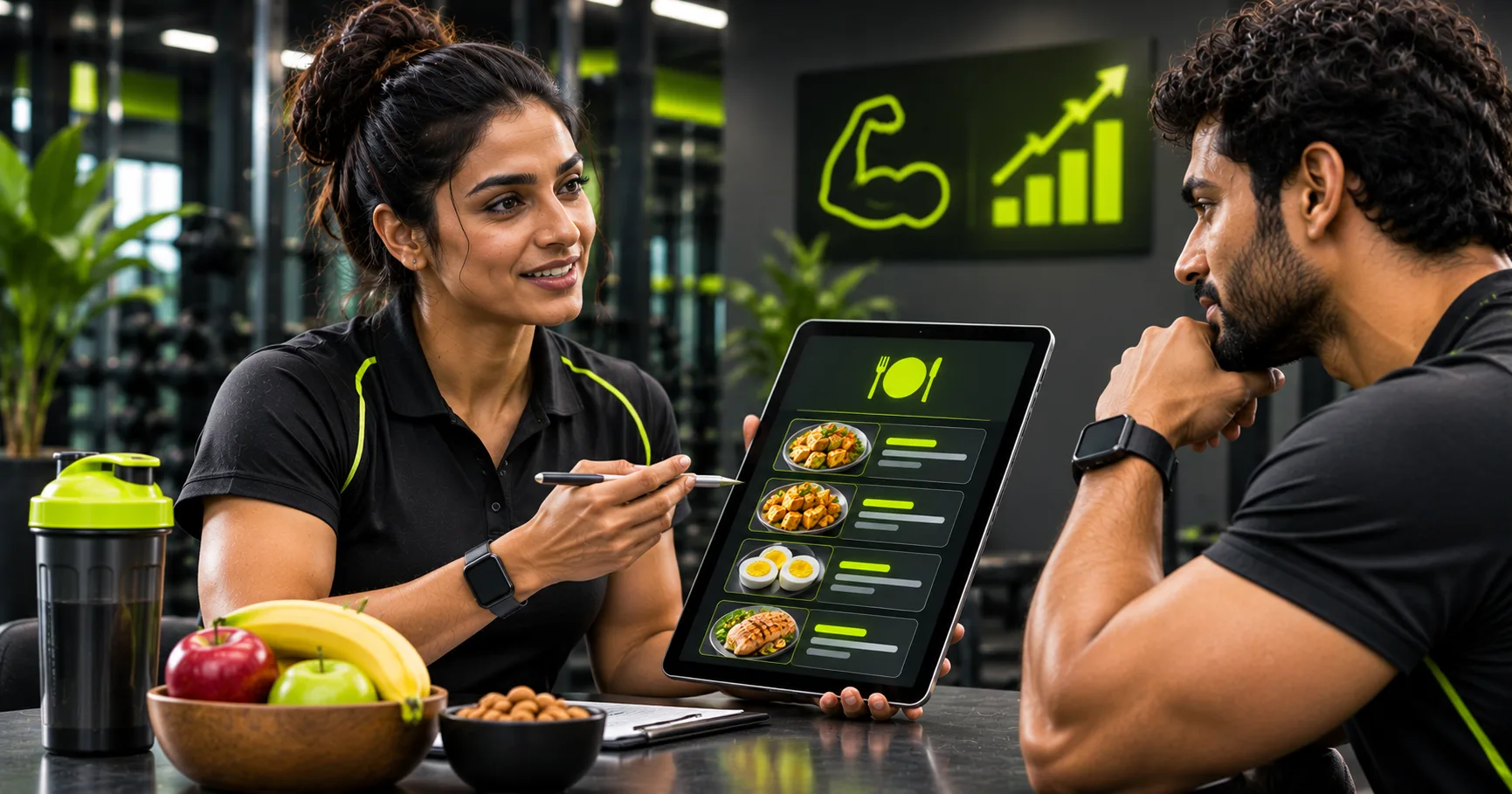
Every experienced fitness professional and gym operator knows the undeniable physiological truth: you cannot out-train a poor diet. A member can execute flawless barbell squats, run interval sprints on treadmills, and train with religious dedication five days a week; but if they return home to consume excess refined carbohydrates, vegetable oils, and inadequate protein, their body composition will barely budge. After ninety days of sweat and soreness with zero visible weight loss or muscle definition, the member blames the gym, concludes that 'exercise doesn't work for my genetics,' and cancels their subscription.
Yet, despite nutrition accounting for over 70% of a client's physical transformation success, most commercial fitness centers treat diet guidance as an unmonetized afterthought. Trainers scribble generic, unsustainable diet plans on scrap paper ('eat boiled chicken and oats') or give casual verbal advice by the water cooler. By failing to structure nutrition as a formalized, paid coaching service, gym owners leave millions of rupees in high-margin secondary revenue on the table. Transforming nutrition coaching into a Standalone Subscription Revenue Stream accelerates client transformations, multiplies trainer income, and drives massive member retention.
The Nutrition Monetization Opportunity: High Margins with Zero Equipment CapEx
To understand why nutrition coaching is the ultimate secondary revenue driver, examine its financial unit economics compared to traditional personal training:
Personal Training is physically limited by time and geography. A personal trainer can only physically train one client at a time for 60 minutes on the gym floor; a trainer tops out at 6 to 8 hours of training per day before physical exhaustion sets in. Furthermore, PT consumes floor space and equipment capacity during crowded peak hours.
Nutrition Coaching, by contrast, scales exponentially. A certified sports nutritionist or nutrition-certified trainer can manage 40 to 60 active online nutrition clients simultaneously. Weekly touchpoints—including dietary adherence reviews, grocery list updates, macro adjustments, and progress photo checks—are conducted digitally through mobile software in 15 minutes per client. There is zero equipment wear-and-tear, zero utility cost, and zero floor overcrowding. Pricing a dedicated nutrition membership at ₹2,500 to ₹4,500 per month generates extraordinary gross margins exceeding 80%.
Informal Verbal Advice vs. Gympify Professional Nutrition Coaching
Here is an operational comparison between the amateur approach to nutrition and Gympify's structured coaching framework:
| Operational Aspect | Informal Verbal Advice / Scrap Paper | Gympify Structured Nutrition Subscription |
|---|---|---|
| Dietary Customization | One-size-fits-all generic PDF copied from Google; ignores cultural food preferences. | Personalized macronutrient targets tailored to Indian vegetarian, Jain, or non-veg diets. |
| Progress Tracking | Subjective bathroom scale; cannot distinguish fat loss from muscle dehydration. | Multi-frequency 3D Body Composition Analysis tracking Visceral Fat & Skeletal Muscle. |
| Client Accountability | Zero follow-up; trainer asks 'Diet kaisa chal raha hai?' once a week on the floor. | Daily in-app meal photo logging, water intake tracking, and weekly digital check-ins. |
| Revenue Model | Given away for free as an unappreciated perk; generates zero recurring income. | Recurring monthly subscription billed via automated UPI AutoPay e-mandates. |
| Client Transformation Rate | Barely 15% achieve visible results due to chronic dietary non-adherence. | Over 68% achieve documented body transformations, driving viral referrals. |
The Step-by-Step Blueprint to Launching a Paid Nutrition Coaching Service
Building a high-margin nutrition division requires establishing professional diagnostic assessments and structured subscription tiers.
Step 1: Invest in Medical-Grade Body Composition Technology
Stop using crude bathroom scales. Acquire a professional Multi-Frequency Bioelectrical Impedance Analysis (BIA) Machine (such as InBody or Tanita). A BIA machine accurately measures intracellular water, extracellular water, skeletal muscle mass, body fat percentage, and visceral fat grade. When a new member sees a clinical printout revealing that their body fat is 31% while their skeletal muscle is deficient, they experience an urgent realization: 'I need professional dietary intervention, not just treadmill cardio.'
Step 2: Package Nutrition into 3 Tiered Offerings
Structure your nutrition services to cater to different budget and commitment levels: - Tier 1: The Monthly Macro Blueprint (₹1,999/mo): Customized daily caloric and macro targets, personalized Indian grocery food swap list, and 1 monthly BIA body scan. - Tier 2: The VIP 1-on-1 Transformation Coaching (₹3,999/mo): Fully customized weekly meal plans, daily meal photo verification on WhatsApp, bi-weekly body composition scans, and 24/7 coach messaging. - Tier 3: The Ultimate Hybrid (PT + Nutrition Bundle: ₹8,500/mo): 12 one-on-one personal training sessions bundled with complete VIP nutrition coaching.
Step 3: Master the Desi Diet Customization Framework
The primary reason nutrition plans fail in India is that coaches prescribe foreign Western diets (boiled asparagus, unseasoned chicken breast, salmon, and kale) that clash with Indian household cooking. Train your nutrition coaches to build macro-balanced plans centered around familiar Indian staples: - High-protein vegetarian options: paneer, low-fat hung curd, roasted chana, soya chunks, edamame, and sattu. - Practical spice integration: turmeric, cumin, coriander, and black pepper, which enhance digestion and insulin sensitivity. - Realistic social frameworks: teaching members how to navigate wedding buffets and restaurant dining without ruining their caloric deficit.
Step 4: Gamify Compliance via In-App Photo Logging
Accountability is the core value clients pay for. Using the Gympify Member Mobile App, clients snap a photo of their lunch plate before eating. The coach receives the photo, verifies portion sizes, and provides immediate feedback: 'Great job on the grilled paneer, Rohit! Just reduce the white rice by 30% and add a cup of green salad for more fiber.' This real-time micro-coaching ensures 90%+ dietary compliance.
Certifying Your Staff: The Legal Scope of Practice
Ensure your fitness coaches operate strictly within their professional Scope of Practice. Personal trainers certified in sports nutrition (through ISSA, NASM-CNC, or ACE) are qualified to provide nutritional education, macronutrient calculations, and healthy lifestyle guidelines to healthy individuals. If a client presents clinical metabolic diseases (such as chronic kidney failure, end-stage Type-1 diabetes, or eating disorders), your gym should partner with a licensed Clinical Dietitian (RD) on a revenue-share referral model.
Key Operational Takeaway
Nutrition coaching is the single highest-margin, most scalable secondary revenue stream available to commercial gyms. Packaging diet consultation into structured monthly recurring subscriptions accelerates member body transformations, boosts trainer income, and delivers hundreds of thousands in equipment-free ancillary revenue. To launch integrated nutrition tracking, body composition logging, and subscription billing, explore Gympify's coaching modules or request an operational walkthrough today.
Related Operational Guides
Expand your gym's secondary revenue and member results with these interconnected resources:
- Desi Diet & Nutrition Planning for Gym Members: Master vegetarian and non-veg Indian macro meal planning.
- Managing Gym Trainer Commissions & PT Splits: Build high-incentive commission models for nutrition coaches.
- Front-Desk Retail & Supplement POS: Align nutrition coaching recommendations with front-desk retail products.
Frequently Asked Questions
Can gym personal trainers legally prescribe diet plans to members in India?
Trainers holding reputable sports nutrition certifications (ISSA, NASM, ACE) can legally provide macronutrient targets, caloric guidelines, and healthy meal options for fitness and body composition. Clinical medical nutrition therapy for diseases (e.g., renal failure, cancer) must be referred to registered clinical dietitians (RD).
How much should a gym charge for standalone monthly nutrition coaching?
Standard standalone nutrition coaching subscriptions in urban India range between ₹2,000 and ₹4,500 per month, depending on the frequency of coach check-ins and inclusion of body composition scans.
How does offering nutrition coaching improve gym member retention?
Members join gyms to transform their bodies. Because nutrition accounts for 70%+ of fat loss and muscle gain results, members enrolled in nutrition programs achieve visible physical changes 3x faster, keeping them motivated and eliminating churn.
What commission split should gyms pay trainers for nutrition subscriptions?
A standard 50:50 split is common: the trainer receives 50% for conducting weekly digital reviews and meal logging, while the gym retains 50% for providing software infrastructure, body composition hardware, and marketing.