
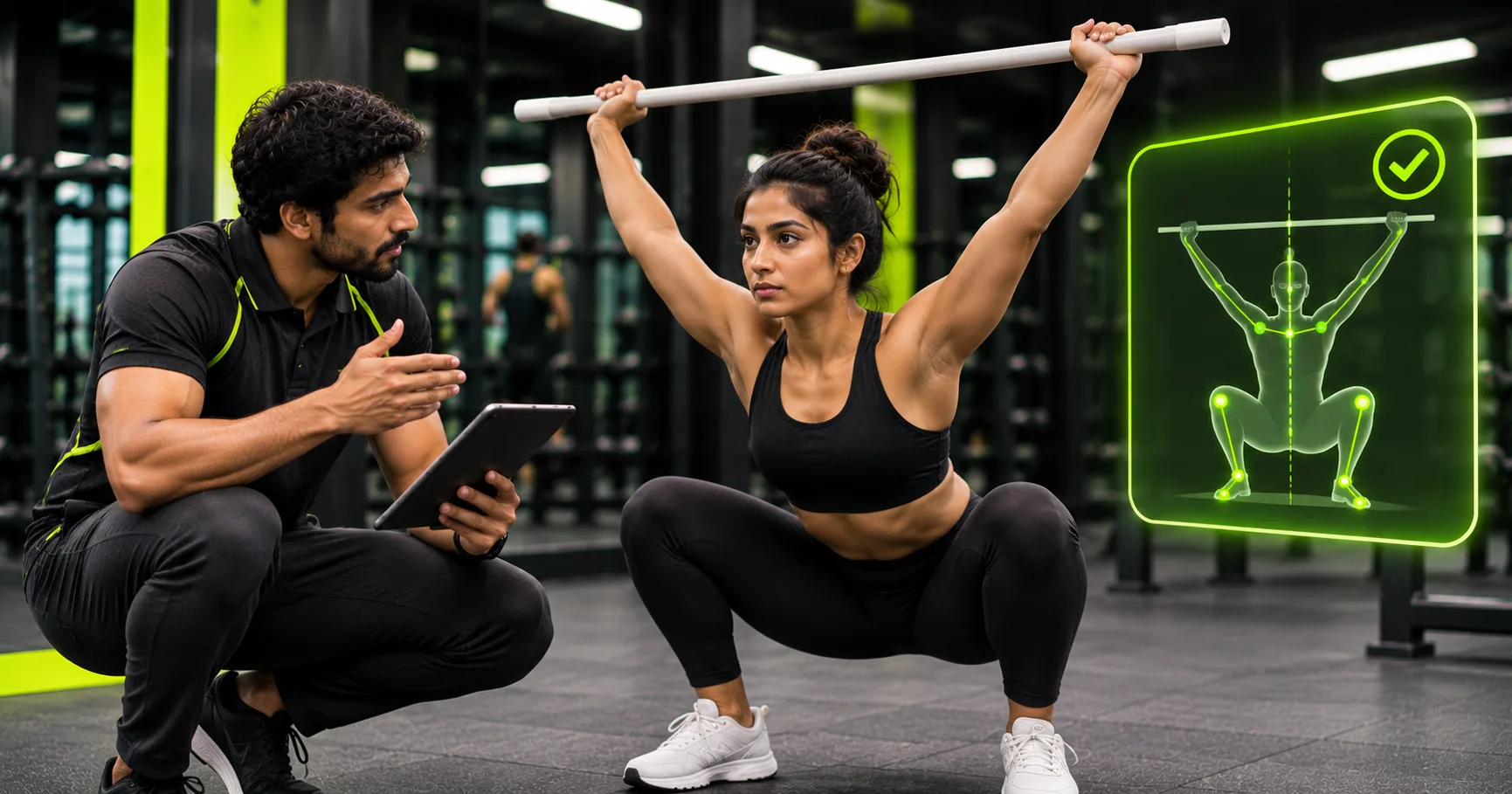
When prospective members join a commercial fitness center, most gym trainers attempt to close personal training packages using aggressive, high-pressure sales pitches: 'Sir, if you want real results, you have to hire me for PT. Otherwise, you'll waste your time.' This amateur approach triggers immediate defensive skepticism. The prospect views the trainer as an aggressive salesperson trying to extract more money, rather than a trusted health expert offering a life-changing medical solution.
High-income fitness professionals operate completely differently: they diagnose before they prescribe. Just as an orthopedic surgeon would never suggest surgery without reviewing an MRI or X-ray, an elite personal trainer should never pitch a workout package without conducting a professional diagnostic assessment. The Overhead Squat Assessment (OHSA)—popularized by the National Academy of Sports Medicine (NASM)—is the gold standard diagnostic tool that visually exposes muscular imbalances, kinetic chain compensations, and injury risks. Mastering this movement screen allows trainers to close ₹30,000 to ₹80,000 personal training packages with effortless clinical authority.
The Clinical Power of the Overhead Squat Assessment (OHSA)
The human body is an interconnected kinetic chain. Due to modern desk-bound lifestyles—characterized by 10 hours of daily chair sitting, poor lumbar posture, and chronic forward head tilt staring into smartphones—over 85% of urban gym prospects suffer from predictable postural distortions: Upper Crossed Syndrome (hunched shoulders, tight pectorals, weak rhomboids) and Lower Crossed Syndrome (anterior pelvic tilt, overactive hip flexors, inhibited glutes).
When an untrained prospect attempts to perform heavy squats or deadlifts with these uncorrected dysfunctions, catastrophic injuries inevitably follow: lumbar disc herniation, rotator cuff impingement, or patellofemoral knee pain. The Overhead Squat Assessment places the body in an integrated dynamic movement pattern that immediately reveals these kinetic compensations. When the trainer visually demonstrates these dysfunctions on a tablet screen, the prospect experiences an undeniable revelation: 'I cannot fix this alone—I need professional coaching.'
Amateur PT Pitch vs. The Diagnostic Movement Screening Protocol
Here is an operational comparison of how typical trainers pitch personal training versus how clinical fitness coaches close high-ticket packages:
| Interaction Phase | Amateur Gym Trainer Pitch | Clinical Movement Screening Protocol |
|---|---|---|
| Initial Interaction | Shows how machines work; pushes prospect to lift heavy on day one. | Explains the kinetic chain; introduces complimentary 15-minute bio-mechanical movement screen. |
| Diagnostic Evaluation | Zero functional testing; asks vague questions like 'How much do you bench?' | Performs 5 dynamic reps of OHSA from Anterior and Lateral viewpoints; records on tablet. |
| Postural Analysis | Subjective feedback: 'Your form looks a bit weak, bro.' | Identifies specific kinetic checkpoints: Knee Valgus, Forward Lean, Arms Falling Forward. |
| The Solution Presentation | Sells random workouts: 'We'll do chest on Monday, back on Tuesday.' | Prescribes a corrective exercise continuum: Inhibit → Lengthen → Activate → Integrate. |
| Closing Conversion Rate | Barely 10% to 15% of consultations convert to paid PT. | 55% to 70% convert because prospect recognizes critical injury prevention value. |
The Step-by-Step Blueprint: Conducting and Closing the Assessment
Executing an Overhead Squat Assessment requires a professional, step-by-step diagnostic workflow that leads naturally into a personal training recommendation.
Step 1: Set Up the Kinetic Checkpoints
Position the prospect in an open area with their shoes removed to evaluate foot and ankle biomechanics accurately. Instruct the client: - Feet shoulder-width apart, pointing straight ahead. - Arms extended fully overhead with elbows locked and thumbs pointing backward. - Instruct them to squat to roughly the height of a chair for 5 deliberate repetitions. Record a 10-second video clip using Gympify's Trainer App from two angles: Anterior (Front View) and Lateral (Side View).
Step 2: Diagnose the 3 Most Common Kinetic Compensations
Play back the video in slow motion on your tablet alongside the prospect. Point out the three classic dysfunctions:
1. Knee Valgus (Knees Caving Inward - Anterior View)
Point to the screen: 'Notice how your knees buckle inward during the descent? That is called Knee Valgus. It means your adductors (inner thighs) are overactive and tight, while your gluteus medius is dormant. If we load you with heavy barbell squats right now, you are placing enormous shear stress on your ACL and meniscus. We must activate your lateral glutes first.'
2. Excessive Forward Lean (Lateral View)
Point out the torso angle: 'See how your chest drops forward almost parallel to the floor? Your body is compensating for stiff ankles (tight gastrocnemius/soleus) and weak abdominal stabilizers. This shifts the entire load into your lower lumbar spine, which is why your lower back feels sore after a long day at the office.'
3. Arms Falling Forward (Lateral View)
Show the shoulder alignment: 'Notice how your arms drop forward past your ears? That indicates chronically tight lats and pectorals pulling your shoulders forward, paired with underactive middle and lower trapezius. If you try overhead shoulder presses today, your rotator cuff tendons are getting pinched.'
Step 3: Prescribe the 4-Phase Corrective Blueprint
Never leave the prospect in fear. Immediately introduce the clinical solution: 1. Inhibit (SMR): Foam roll overactive muscles (calves, lats, adductors). 2. Lengthen (Static Stretching): Lengthen chronically shortened muscle fibers. 3. Activate (Isolated Strengthening): Fire dormant muscles (glute medius, lower traps, TVA). 4. Integrate (Dynamic Movement): Re-teach the nervous system to squat with flawless alignment.
Step 4: The Natural Clinical Close
Closing the sale becomes completely effortless. You are no longer selling reps; you are prescribing rehabilitation: 'Amit, your structural cardiovascular potential is fantastic, but lifting heavy weights on top of these three dysfunctions is an express ticket to a herniated disc or shoulder injury. I recommend our 12-Week Kinetic Restoration & Transformation Blueprint. We will spend the first four weeks correcting these compensations, and then progressively build lean muscle safely. Let’s get your schedule finalized so we can start your corrective phase this Thursday.'
Documenting Progress & Elevating Trainer Credibility
By logging the client's initial movement assessment photographs directly inside Gympify, the trainer creates an immutable baseline record. When the assessment is re-conducted at day 30, the client can visually see that their knees no longer cave inward and their chest remains upright. This visual proof of physiological progress guarantees client retention and drives enthusiastic word-of-mouth referrals.
Key Operational Takeaway
Stop letting your personal trainers pitch workouts like used car salesmen. Implementing diagnostic movement screenings like the Overhead Squat Assessment elevates your coaching staff into clinical experts, eliminates prospect skepticism, and unlocks 60%+ closing rates on premium personal training packages. To equip your coaching team with digital movement screening and client tracking tools, discover Gympify's trainer modules or book an operational walkthrough today.
Related Operational Guides
Master personal training management and revenue expansion with these interconnected resources:
- Managing Gym Trainer Commissions & PT Splits: Build high-incentive compensation models for elite trainers.
- Nutrition Coaching as a Standalone Revenue Stream: Combine movement screening with personalized nutrition planning.
- Digital PAR-Q & Health Screening for Gyms: Screen members for medical contraindications before movement testing.
Frequently Asked Questions
What certification qualifies a trainer to conduct the Overhead Squat Assessment?
The Overhead Squat Assessment is a standardized protocol from the National Academy of Sports Medicine (NASM) Corrective Exercise Specialist (CES) curriculum. Reputable international certifications (ACE, ACSM, ISSA) also incorporate functional kinetic screening protocols.
Why should prospects remove their shoes during the movement screen?
Modern cushioned running shoes have elevated heels (heel-to-toe drops of 8mm to 12mm) that artificially mask ankle dorsiflexion limitations. Testing barefoot exposes genuine ankle tightness, foot pronation, and arch collapse.
How long should a complimentary movement screen take during an initial gym tour?
A concise movement screen takes only 10 to 15 minutes: 3 minutes to explain the kinetic chain, 4 minutes to record 5 reps of the squat, and 5 minutes to review the video and present corrective recommendations.
What if a prospect has severe pain during the Overhead Squat Assessment?
If a client reports sharp, acute pain (rather than muscle tightness), stop the assessment immediately. Trainers must recognize their scope of practice: refer the client to a licensed physiotherapist or orthopedic physician before initiating physical exercise.